
 EN
EN

Modern businesses face increasing security challenges that require sophisticated surveillance solutions. Traditional wired security systems often fall short of providing the flexibility and coverage needed for dynamic commercial environments. A WiFi camera system offers unprecedented advantages for office and warehouse surveillance, delivering real-time monitoring capabilities without the constraints of physical cabling infrastructure. These wireless security solutions have revolutionized how businesses approach property protection, enabling comprehensive coverage across vast areas while maintaining cost-effectiveness and operational efficiency.
Enhanced Flexibility and Installation Advantages
Wireless Infrastructure Benefits
The primary advantage of implementing a WiFi camera system lies in its installation flexibility. Unlike traditional wired surveillance systems that require extensive cable routing through walls, ceilings, and conduits, wireless cameras can be positioned anywhere within the wireless network range. This flexibility proves particularly valuable in warehouse environments where structural modifications for cable installation would be prohibitively expensive or logistically challenging. Business owners can relocate cameras as operational needs change without incurring additional infrastructure costs or disrupting daily operations.
Installation time represents another significant benefit of wireless surveillance technology. Professional installation teams can complete WiFi camera deployments in a fraction of the time required for traditional wired systems. This reduced installation timeline minimizes business disruption and allows companies to achieve security coverage more rapidly. The elimination of extensive cable runs also reduces potential failure points in the system, as wireless connections are less susceptible to physical damage from construction activities, rodents, or environmental factors that commonly affect traditional cabling.
Scalability and Future-Proofing
Wireless surveillance systems offer superior scalability compared to their wired counterparts. Organizations can easily add additional camera coverage as business expansion occurs without redesigning the entire surveillance infrastructure. This scalability proves essential for growing businesses that may need to monitor additional warehouse sections, office floors, or outdoor areas. The modular nature of WiFi camera systems allows for incremental security improvements that align with budget cycles and operational priorities.
Future technology upgrades become significantly more manageable with wireless surveillance architecture. As camera technology evolves to include higher resolutions, enhanced night vision capabilities, or advanced analytics features, individual units can be upgraded without affecting the entire system. This future-proofing aspect ensures that surveillance investments remain relevant and effective as security requirements evolve over time.
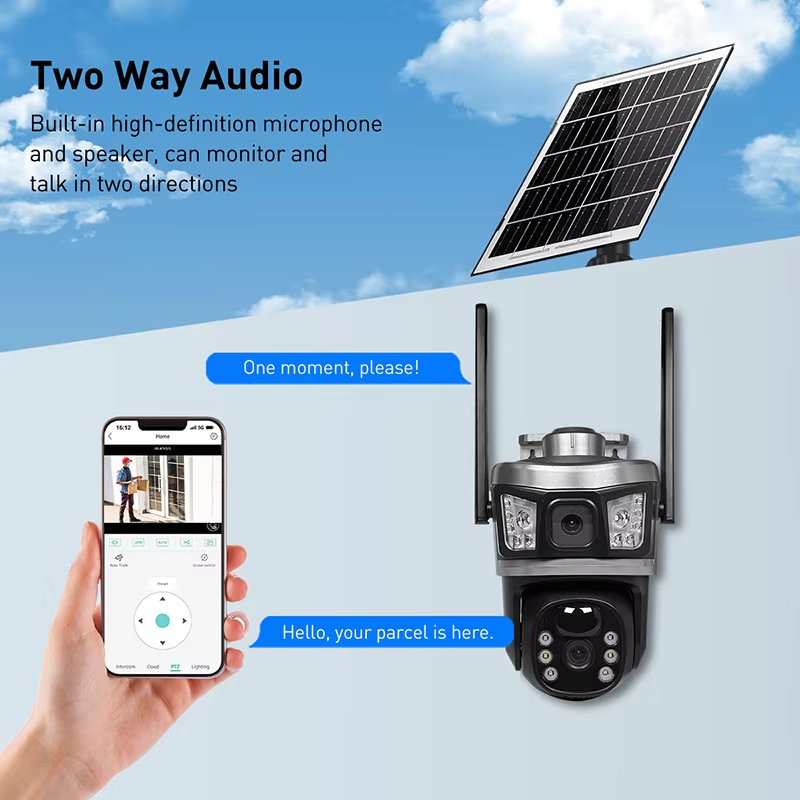
Advanced Monitoring and Remote Access Capabilities
Real-Time Surveillance Features
Modern WiFi camera systems provide sophisticated real-time monitoring capabilities that enhance security effectiveness. Motion detection algorithms automatically trigger recording and alert notifications when suspicious activity occurs, ensuring that security personnel can respond promptly to potential threats. Advanced models incorporate intelligent analytics that can distinguish between routine activity and genuine security concerns, reducing false alarms while maintaining comprehensive coverage of critical areas.
Night vision technology in contemporary wireless cameras ensures continuous surveillance regardless of lighting conditions. Infrared capabilities allow for clear monitoring of warehouse and office spaces during after-hours periods when most security incidents typically occur. Some advanced units feature full-color night vision technology that provides enhanced detail recognition compared to traditional monochrome infrared systems, improving the quality of evidence collection and incident investigation processes.
Mobile and Remote Management
The integration of mobile applications with WiFi camera systems revolutionizes surveillance management for business owners and security personnel. Real-time access to camera feeds through smartphones and tablets enables immediate response to security alerts regardless of physical location. This remote accessibility proves particularly valuable for multi-site operations where centralized monitoring improves overall security coordination and response times.
Cloud storage integration eliminates the need for on-site recording equipment while providing secure, accessible footage storage. Automatic backup capabilities ensure that critical surveillance data remains protected even in cases of equipment theft or damage. Advanced cloud platforms offer sophisticated search and retrieval functions that simplify incident investigation and evidence compilation processes, streamlining security management workflows for busy operations teams.
Cost-Effectiveness and Return on Investment
Reduced Infrastructure Costs
The financial benefits of WiFi camera implementation extend beyond initial hardware costs to include significant savings in installation and ongoing maintenance expenses. Elimination of extensive cable infrastructure reduces material costs while minimizing the specialized labor required for system deployment. These savings become particularly pronounced in large warehouse facilities where cable routing distances would be substantial and require professional electrical work to ensure code compliance and system reliability.
Maintenance costs for wireless surveillance systems typically remain lower than traditional wired alternatives due to fewer physical connection points and reduced exposure to environmental damage. The absence of cable infrastructure eliminates common maintenance issues related to cable degradation, connector corrosion, and physical damage from facility operations. This reduced maintenance requirement translates to lower ongoing operational costs and improved system reliability over the surveillance system's operational lifespan.
Insurance and Loss Prevention Benefits
Comprehensive surveillance coverage provided by WiFi camera systems often qualifies businesses for reduced insurance premiums related to property and theft coverage. Insurance providers recognize the deterrent effect and evidence collection capabilities of modern surveillance systems, resulting in tangible cost savings that contribute to the system's return on investment calculation. Documentation of proper security measures may also expedite claims processing in the event of actual security incidents.
Loss prevention capabilities of advanced surveillance systems extend beyond theft deterrence to include monitoring of operational efficiency and safety compliance. WiFi cameras enable managers to identify workflow bottlenecks, safety violations, and productivity issues that may not be apparent through traditional oversight methods. This operational visibility can result in significant cost savings through improved efficiency and reduced liability exposure, further enhancing the system's overall value proposition.
Integration with Modern Security Ecosystems
Smart Building Technology Compatibility
Contemporary WiFi camera systems integrate seamlessly with broader smart building management platforms, creating comprehensive security ecosystems that enhance overall facility protection. Integration with access control systems enables automatic recording triggered by door access events, creating detailed audit trails for sensitive areas. Environmental sensors can trigger camera recording when unusual conditions are detected, providing visual confirmation of potential security or safety issues.
Artificial intelligence integration in modern surveillance systems enables advanced analytics capabilities that extend beyond basic motion detection. Behavioral analysis algorithms can identify suspicious patterns, recognize authorized personnel, and detect unusual activities that may indicate security threats. These intelligent features reduce the burden on security personnel while improving the accuracy and effectiveness of surveillance monitoring activities.
Compliance and Documentation Benefits
Regulated industries often require comprehensive documentation of facility activities and security measures for compliance purposes. WiFi camera systems provide automated documentation capabilities that support regulatory compliance requirements while reducing administrative burden. Timestamped recordings create detailed activity logs that demonstrate adherence to security protocols and operational procedures required by industry regulations.
Evidence collection capabilities of modern surveillance systems support legal proceedings and insurance claims with high-quality digital recordings that meet courtroom admissibility standards. Advanced compression algorithms maintain evidence quality while optimizing storage requirements, ensuring that critical footage remains accessible and usable for extended periods as required by legal and regulatory retention policies.
FAQ
What is the typical wireless range for WiFi surveillance cameras?
Most commercial WiFi cameras operate effectively within a 150-300 foot range from the wireless router or access point, depending on environmental factors and obstacles. Range extenders and mesh network systems can significantly expand coverage areas for larger facilities. Professional site surveys help determine optimal camera placement and network infrastructure requirements to ensure reliable connectivity throughout the surveillance area.
How do WiFi cameras maintain security against cyber threats?
Modern WiFi cameras incorporate multiple security layers including WPA3 encryption, secure authentication protocols, and regular firmware updates to protect against cyber threats. Advanced models feature encrypted data transmission and secure cloud storage with multi-factor authentication. Regular password updates and network segmentation further enhance cybersecurity protection for wireless surveillance systems.
Can WiFi cameras function during internet outages?
Many WiFi cameras include local storage capabilities through SD cards or network-attached storage devices that continue recording during internet disruptions. Local recording ensures that surveillance coverage remains active even when cloud connectivity is temporarily unavailable. Advanced systems automatically sync recorded footage to cloud storage once internet connectivity is restored, preventing data loss during outages.
What factors affect WiFi camera battery life in wireless installations?
Battery-powered WiFi cameras typically operate for 3-6 months depending on recording frequency, motion detection sensitivity, and environmental conditions. Solar panel accessories can extend battery life indefinitely in locations with adequate sunlight exposure. Power management features like scheduled recording and motion-activated recording help optimize battery performance while maintaining effective surveillance coverage.
