
 EN
EN
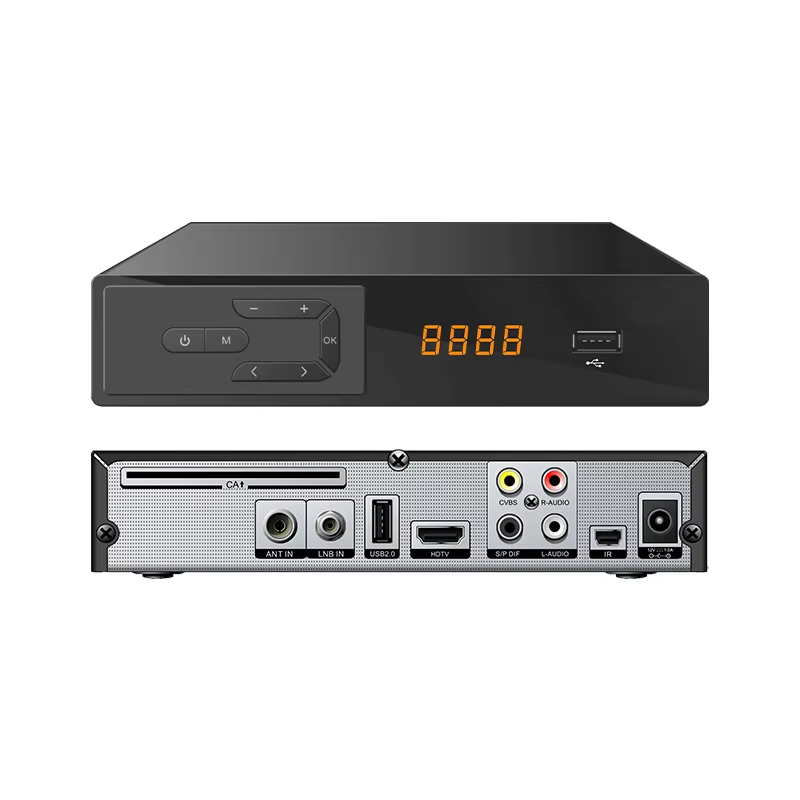
The digital television landscape has evolved dramatically over the past decade, with advanced broadcasting standards revolutionizing how consumers access and enjoy multimedia content. Modern viewers demand versatile solutions that can seamlessly handle multiple signal types while delivering exceptional picture quality and reliable performance. A high-performance DVB-S2 combo receiver represents the pinnacle of this technological advancement, combining satellite, terrestrial, and cable reception capabilities in a single, sophisticated device that meets the diverse needs of today's entertainment ecosystem.
The convergence of multiple broadcasting standards within a single receiver unit has transformed the way manufacturers approach digital television hardware design. Contemporary consumers no longer want separate devices cluttering their entertainment centers, preferring streamlined solutions that deliver comprehensive functionality without compromising performance quality. This shift in consumer preferences has driven innovation in the development of combo receivers that can efficiently process various signal formats while maintaining optimal signal integrity across all supported transmission methods.
Advanced Signal Processing Capabilities
Multi-Standard Demodulation Technology
The foundation of any exceptional combo receiver lies in its sophisticated demodulation technology, which must efficiently handle diverse signal formats including DVB-S2, DVB-T2, and DVB-C standards simultaneously. Advanced silicon chipsets incorporate dedicated processing cores that can seamlessly switch between different modulation schemes while maintaining optimal signal-to-noise ratios across all supported formats. This multi-standard approach ensures consistent performance regardless of the input source, whether receiving high-definition satellite broadcasts or terrestrial digital signals.
Modern demodulation engines employ adaptive algorithms that continuously monitor signal conditions and automatically adjust processing parameters to maintain optimal reception quality. These intelligent systems can compensate for various transmission impairments, including multipath interference, frequency offsets, and atmospheric disturbances that commonly affect satellite communications. The integration of forward error correction mechanisms further enhances signal reliability, enabling robust performance even under challenging reception conditions.
Enhanced Tuner Architecture
The tuner subsystem represents another critical component that distinguishes high-performance receivers from basic models. Premium combo units feature independent tuner circuits for each supported standard, eliminating the need for complex switching networks that can introduce signal degradation. This architecture allows simultaneous reception of multiple channels across different transmission methods, enabling advanced features like picture-in-picture functionality and background channel scanning operations.
Temperature compensation mechanisms within the tuner circuits ensure stable frequency response across varying environmental conditions. High-quality crystal oscillators provide precise frequency references that maintain accurate channel tuning over extended operational periods. Additionally, automatic gain control systems dynamically adjust signal levels to prevent overload conditions while maintaining adequate sensitivity for weak signal reception.
Comprehensive Connectivity Options
Digital Output Interfaces
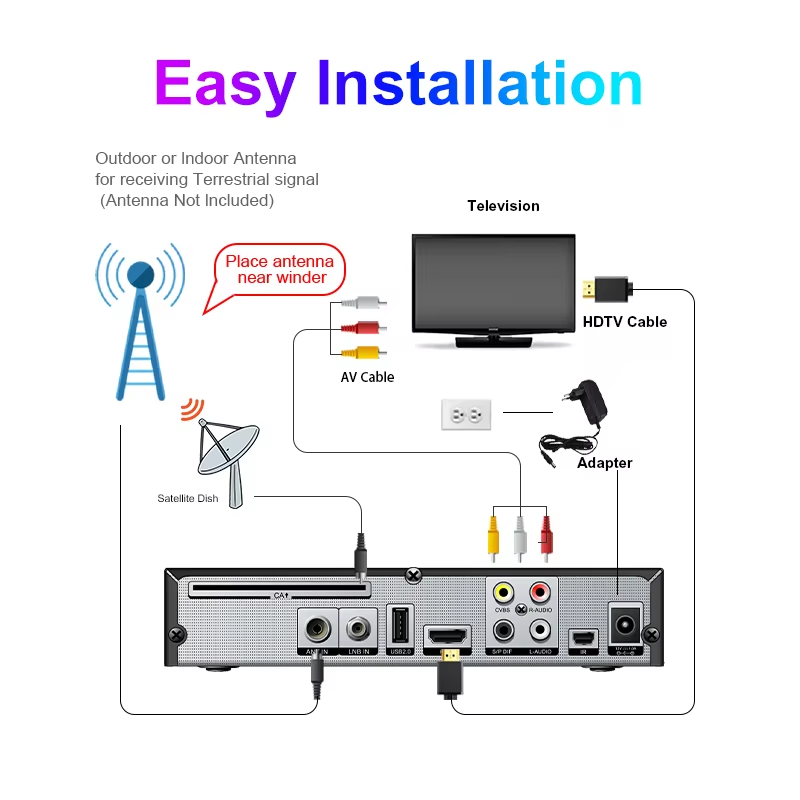
Contemporary receivers must provide extensive connectivity options to accommodate diverse display devices and audio systems found in modern home entertainment environments. High-definition multimedia interface ports support uncompressed digital video transmission with embedded multichannel audio, ensuring pristine signal quality without degradation from analog conversion processes. Multiple interface versions accommodate varying bandwidth requirements, from standard definition content to ultra-high-definition formats requiring substantial data throughput.
Component video outputs maintain compatibility with legacy display devices while providing superior analog video quality compared to composite connections. These interfaces support various resolution formats and can automatically configure output parameters based on connected display capabilities. Optical and coaxial digital audio outputs enable connection to high-end audio processing systems, supporting both compressed and uncompressed audio formats including advanced surround sound codecs.
Network Integration Features
Modern combo receivers increasingly incorporate network connectivity capabilities that extend functionality beyond traditional broadcast reception. Ethernet interfaces enable firmware updates, electronic program guide downloads, and interactive service access through broadband internet connections. Wireless networking options provide flexible installation possibilities without requiring hardwired network connections, particularly beneficial in retrofit installations where cable routing presents challenges.
Universal serial bus ports facilitate external storage device connection for personal video recording functionality and multimedia file playback. These interfaces support various file systems and media formats, enabling users to enjoy content from multiple sources through a unified interface. Some advanced models incorporate media server capabilities, allowing content sharing across networked devices within the home environment.
User Interface and Control Systems
Intuitive Menu Navigation
The user interface represents a crucial aspect that significantly impacts overall user satisfaction and device adoption rates. Well-designed menu systems provide logical organization of configuration options while maintaining simplicity for basic operations. Graphical overlays should respond quickly to user input without introducing noticeable delays that detract from the viewing experience. Clear visual hierarchies guide users through complex setup procedures while providing contextual help information when needed.
Customizable interface elements allow users to personalize their interaction experience according to individual preferences and technical expertise levels. Advanced users can access detailed configuration parameters while novice users benefit from simplified setup wizards that automate complex procedures. Multi-language support ensures broad market compatibility, with proper font rendering for various character sets and writing systems.
Remote Control Functionality
Ergonomic remote control design facilitates comfortable operation during extended viewing sessions while providing quick access to frequently used functions. Dedicated buttons for common operations eliminate the need to navigate through multiple menu levels for basic tasks. Backlit keypads enhance usability in low-light environments, while programmable function keys enable customization based on individual usage patterns.
Advanced models may incorporate smartphone applications that replicate remote control functionality while adding enhanced features like keyboard input for search operations. These mobile applications can also provide program guide access and scheduling capabilities, enabling users to manage recording operations remotely. Voice control integration represents an emerging trend that simplifies operation through natural language commands.
Performance Optimization Features
Signal Quality Enhancement
High-performance combo receivers incorporate sophisticated signal processing algorithms that enhance received content quality beyond the original transmission parameters. Motion compensation algorithms reduce artifacts in moving scenes, while edge enhancement processing sharpens image details without introducing unwanted noise. Color space conversion engines ensure accurate reproduction across different display technologies, maintaining consistent visual quality regardless of the connected display device.
Noise reduction systems analyze incoming video signals to identify and suppress various types of interference and artifacts. These adaptive filters can distinguish between legitimate image content and unwanted noise components, selectively processing signals to improve overall picture quality. Advanced implementations employ multiple processing stages that address specific artifact types commonly encountered in digital television broadcasts.
Power Management Systems
Energy efficiency has become increasingly important in consumer electronics design, driven by environmental concerns and operational cost considerations. Modern DVB-S2 combo receiver units implement intelligent power management that dynamically adjusts consumption based on operational requirements. Standby modes significantly reduce power consumption during inactive periods while maintaining essential functions like timer-based recording operations and software update capabilities.
Thermal management systems monitor internal component temperatures and adjust fan speeds or processing loads to maintain optimal operating conditions. These systems prevent thermal-induced performance degradation while extending component lifespan through controlled environmental conditions. Some implementations incorporate passive cooling designs that eliminate fan noise entirely, particularly beneficial for bedroom installations where acoustic considerations are paramount.
FAQ
What transmission standards should a quality combo receiver support
A comprehensive combo receiver should support DVB-S2 for satellite reception, DVB-T2 for terrestrial broadcasts, and DVB-C for cable television systems. This tri-standard compatibility ensures maximum flexibility for various installation scenarios and signal sources. Additionally, backward compatibility with legacy standards like DVB-S and DVB-T maintains access to older broadcast services that may not have transitioned to newer transmission methods.
How important is processing power in receiver performance
Processing power directly impacts user experience through faster channel switching, responsive menu navigation, and enhanced signal processing capabilities. Modern receivers require sufficient computational resources to handle multiple simultaneous tasks including background channel scanning, electronic program guide updates, and advanced video processing algorithms. Inadequate processing power results in sluggish operation and reduced functionality that diminishes overall user satisfaction.
What connectivity options are essential for modern installations
Essential connectivity includes high-definition multimedia interface for digital video output, optical audio for surround sound systems, and ethernet for network services. Universal serial bus ports enable external storage connection for recording and media playback functions. Wireless networking capabilities provide installation flexibility, while component video outputs maintain compatibility with legacy display devices during system transitions.
How do combo receivers handle signal conflicts between different standards
Advanced combo receivers employ independent tuner circuits for each supported standard, eliminating conflicts through hardware separation. This architecture enables simultaneous reception from multiple signal sources without interference or performance degradation. Intelligent switching systems coordinate between different tuner modules while maintaining optimal signal processing for each transmission method, ensuring consistent performance across all supported formats.
